
Energy Ministry Budget Spending Stalls at 3%, Spurring Push for Reform
Energy Minister Biraj Bhakta Shrestha has directed subordinate departments to scrap end-of-year spending habits after the ministry recorded just 3.08 percent financial progress in the first two and a half months of the fiscal year.
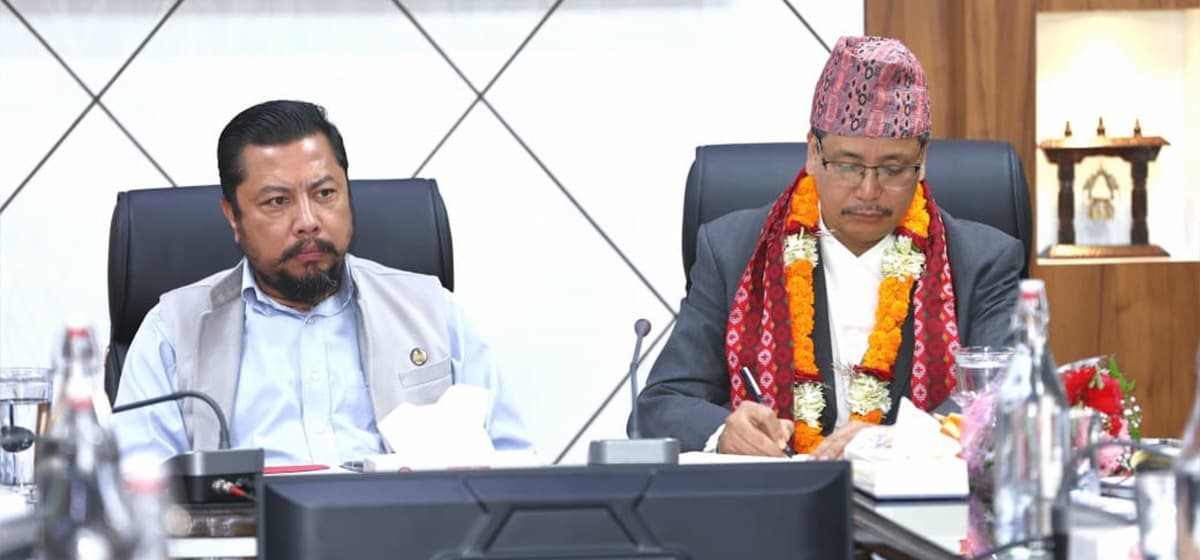
Minister for Energy, Water Resources and Irrigation Biraj Bhakta Shrestha has directed subordinate departments to overhaul project execution after ministry spending languished at just 3.08 percent two and a half months into the current fiscal year.
Speaking at an internal review meeting on Wednesday, Shrestha urged officials to discard the civil service's long-standing habit of rushing capital expenditure in the final weeks of the fiscal calendar. Instead, he called for rigid project calendars, prompt tendering, and timely contractual closures, according to reporting by Nagarik News and Gorkhapatra.
Shrestha argued that governance must rely on predictable administrative systems rather than individual discretion, emphasizing that bureaucratic delays amount to a lapse in public accountability. As reported by state-run daily The Rising Nepal, the minister advocated enforcing institutional rewards and penalties while pressing political leaders and career bureaucrats to hold themselves answerable to citizens.
Administrative attention had been redirected over the past month toward responding to seasonal water-induced disasters across the country. Addressing the disruption, Shrestha stated that authorities must prepare a dedicated recovery blueprint to rebuild damaged assets while simultaneously driving forward planned development schemes.
Newly appointed Energy Secretary Dr. Jagdishwor Karmacharya echoed the minister's concerns during the session, warning that depressed capital spending threatens delivery across critical infrastructure sectors. Karmacharya urged all ministerial divisions to mobilize operational mechanisms without delay to meet development benchmarks.
Despite the sluggish budget disbursement, the review highlighted several legislative and regulatory milestones recorded by the ministry this fiscal year. Officials noted that draft legislation governing water resources and renewable energy has been submitted to the Cabinet. Other initiatives underway include drafting the Budhigandaki Development Authority framework, updating electricity and power-trading rules, preparing Letters of Intent for private sector electricity traders, and formalizing private-sector participation in transmission line construction and management.
The push for administrative accountability follows public appeals by the minister to ease pressure on the national grid. Earlier in the week, Techpana reported that Shrestha urged households to curb avoidable electricity waste—including turning off wall sockets and multi-plugs left idle on standby. Shrestha clarified that the government was not asking people to limit essential consumption, but noted that aging local transformers are facing acute strain from surging adoption of electric vehicles and air conditioning, alongside infrastructure damaged by seasonal calamities.