
Surging Rivers Inundate Sarlahi Villages and Wreck Chitwan Promenade
Monsoon floods have breached embankments along the Lakhandei River in Sarlahi, leaving villages marooned, while record water levels on the Narayani River wrecked Bharatpur's riverfront promenade.
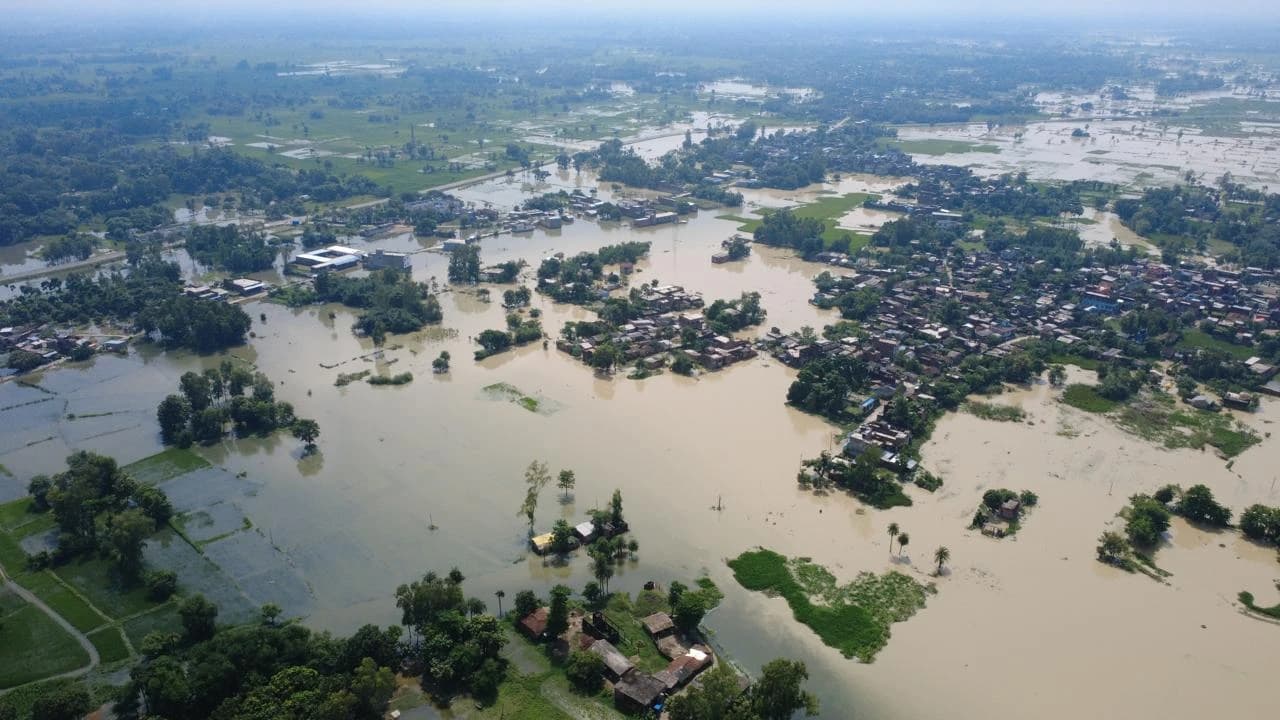
Late-monsoon river surges caused widespread inundation and structural destruction across central and southern Nepal, breaching flood embankments in Sarlahi and ravaging public riverfront infrastructure in Chitwan following days of relentless downpours.
In Madhesh Province, the swelling Lakhandei River ruptured embankments and inundated human settlements and ripening paddy crops across multiple localities in Sarlahi district. Nepal Views reported that floodwaters swept into Bhadsar village in Malangwa Municipality-5 after a protective barrier gave way, submerging homes and surrounding farmland under deep water.
Expanding on the scale of the disaster, Gorkhapatra reported that an embankment collapse upstream at Chhapkaiya in Kaudena Rural Municipality-5 directed heavy runoff into Bhadsar as well as Khutouna in Malangwa Municipality-6 following rainfall that began midweek. The state daily reported that waist-deep water stranded dozens of families inside their residences, spoiled stored grain and clothing, and forced community schools to shut down. Malangwa Ward 6 Chairperson Ram Kailash Yadav explained that water cannot drain away because the settlement is boxed in by an elevated Indian road to the south and Lakhandei dykes to the west. Sarlahi Chief District Officer Bijay Raj Subedi told the outlet that authorities plan to mobilize security personnel with bamboo and sandbags to plug the Chhapkaiya breach, though pumping out the vast expanse of stagnant water remains unfeasible.
Simultaneously, in Bagmati Province, the Narayani River swelled to historic proportions, inflicting severe devastation along the riverside corridor in Narayangarh. Annapurna Post reported that the local hydrological monitoring station recorded an unprecedented water level of 11.9 meters on September 27 (Asoj 11). The deluge heavily damaged the riverfront between Lilachok and Pulchok, turning a vibrant riverside public gathering space into barren gravel beds. Longtime local residents noted they had never witnessed such river levels in over six decades of living in the area.
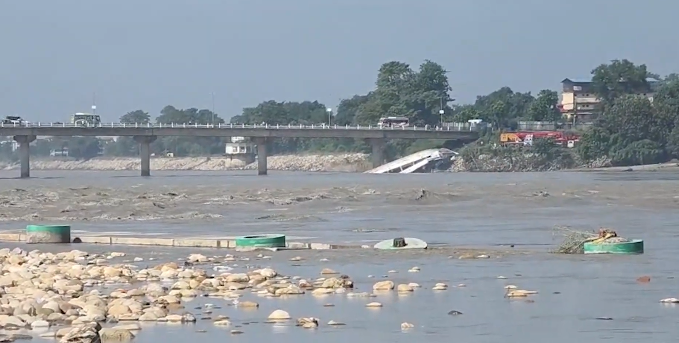
The surging Narayani also washed away high-cost recreational installations built by Bharatpur Metropolitan City, Nagarik News reported. The municipal government had invested tens of millions of rupees to develop a "sea-beach model" tourism promenade, featuring paved walking trails, mosaic tiles, turf, and solar lights, backed by a Rs 160 million provincial riverbank training project. While the core embankment structure remained intact, the flood tore up pedestrian trails, swept away soil and ornamental grass, and left gaping craters across the banks, prompting public outcry over expensive and short-sighted municipal investments placed directly in an active floodplain.