
SpaceX Sends Starship Megarocket into Earth Orbit on 14th Test
SpaceX’s colossal Starship rocket achieved Earth orbit for the first time on its 14th test flight, deploying internet satellites before splashing down in the Pacific.
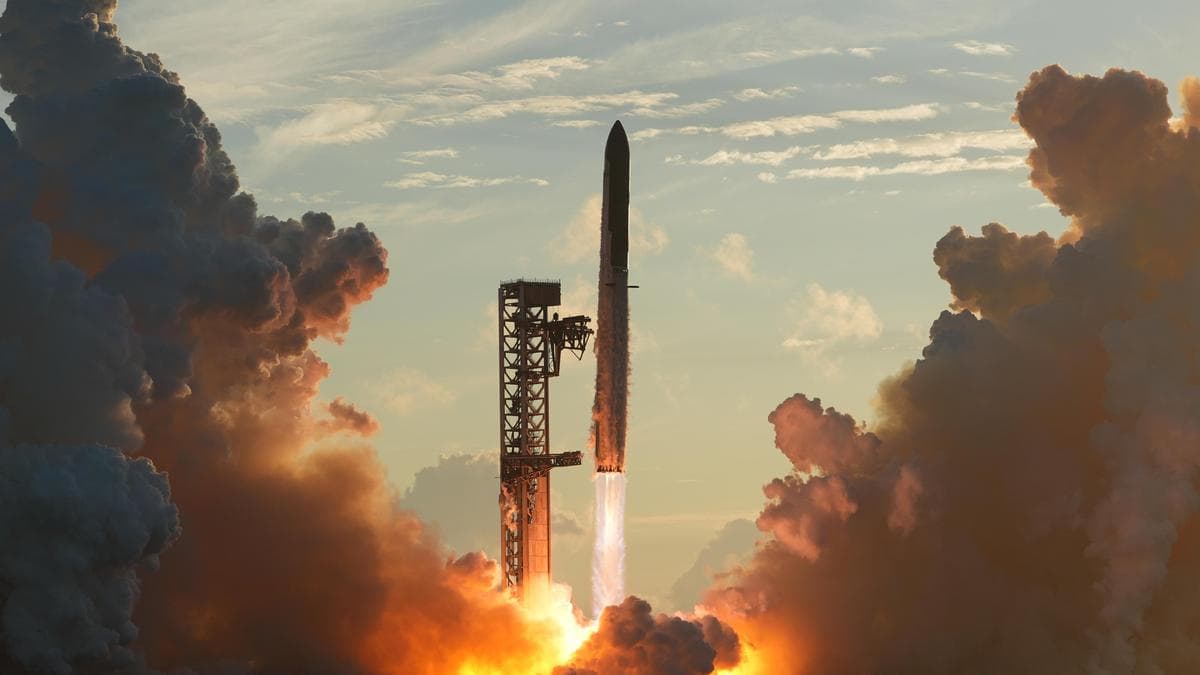
SpaceX propelled its Starship rocket into Earth orbit for the first time on Monday, achieving a critical milestone for its reusable space vehicle despite an engine glitch and an abbreviated flight plan.
The uncrewed 124-metre-tall vehicle took off from the company’s Starbase facility near Boca Chica, Texas. It marked the 14th full-scale test flight of the massive system. The upper stage reached its planned orbital altitude of roughly 275 kilometres and hit orbital speeds of 28,000 kilometres per hour, successfully releasing 26 next-generation Starlink internet satellites.
According to Al Jazeera and The Guardian, the mission faced early uncertainty after one engine shut down prematurely during the ascent. However, mission controllers determined the remaining systems were operating smoothly and opted to proceed with the orbital burn rather than aborting.
The test flight did not follow its full initial roadmap. SpaceX had originally scheduled the upper stage to circle the planet six times across a 10-hour flight before touching down in the Pacific Ocean west of Chile. Instead, controllers decided to conclude the mission early. Times of India and The Guardian reported that the spacecraft re-entered the atmosphere and splashed down in the northern Pacific Ocean roughly three hours after launch, bursting into flames upon water impact north of Hawaii.
Meanwhile, the Super Heavy first-stage booster completed its burn, separated, and steered toward a planned splashdown in the waters of the Gulf of Mexico, omitting earlier experimental attempts to catch the booster with robotic launch-tower arms.
The test holds wide significance for commercial satellite communications and international exploration. While Al Jazeera noted that the 26 newly launched Starlink units will join more than 11,000 existing satellites already delivering broadband connectivity across the globe, The Hindu highlighted that Starship's success is closely watched by investors following the aerospace firm’s recent public market debut.
The achievement also carries direct consequences for the United States space agency. NASA plans to use Starship as a lunar lander under its Artemis moon exploration programme. Times of India reported that NASA Administrator Jared Isaacman congratulated the company on reaching orbit. Under current timetables, Artemis III will test docking procedures in Earth orbit alongside Blue Origin's Blue Moon craft, while the Artemis IV mission—targeted for no earlier than 2028—aims to return astronauts to the lunar surface using the lander that proves ready first.