
Government Opens National Transmission Grid to Private Power Producers
The Electricity Regulatory Commission has announced open-access transmission tariffs for private energy producers, even as developers submit broad reform demands to overhaul grid access and end utility monopolies.

The government has opened the national electricity grid to private power producers, fixing dedicated wheeling charges to enable third-party power trade across the country.
According to Nagarik News, the Electricity Regulatory Commission made the transmission tariffs public in Kathmandu in the presence of Energy Minister Biraj Bhakta Shrestha. The commission determined wheeling charges for fiscal year 2083/84 (2026–27) under its newly issued grid transmission cost calculation guidelines. Commission Chair Ram Prasad Dhital said medium- and long-term open access to the Nepal Electricity Authority grid would cost Rs 413,000 per megawatt per month, while short-term access has been priced at 57 paisa per kilowatt-hour. Commission member Jay Raj Bhandari added that separate rules are in preparation for dedicated and radial lines outside the national grid.
The policy move addresses a long-standing grievance of the Independent Power Producers' Association, Nepal. As reported by Khabarhub and Artha Sansar, the umbrella body recently submitted broad reform recommendations to the Prime Minister’s Office after the cabinet secretariat requested feedback from 21 private sector organizations. IPPAN urged authorities to amend the Electricity Act of 1992 to formally legalize domestic and cross-border power trading for private firms, arguing that regulatory obstacles endanger over Rs 4 trillion in planned investments.
IPPAN also demanded an end to the state-owned power utility's institutional monopoly across power generation, transmission, distribution, and trade, recommending that the load dispatch center operate as an autonomous agency. The association pressed the government to unfreeze stalled power purchase agreements for roughly 17,000 megawatts of proposed capacity, update PPA rates stagnant since 2011, extend plant licenses to 50 years, and institute a fast-track single-window clearance mechanism for forestry and environmental approvals, according to Artha Sansar and Khabarhub.
Meanwhile, private developers continue to push back against operational constraints imposed by the utility. Saral Patrika reported that an IPPAN delegation led by its president, Mohan Kumar Dangi, presented 19 formal objections to NEA Managing Director Dirghayu Kumar Shrestha regarding draft procedures on grid connection points and voltage level adjustments.
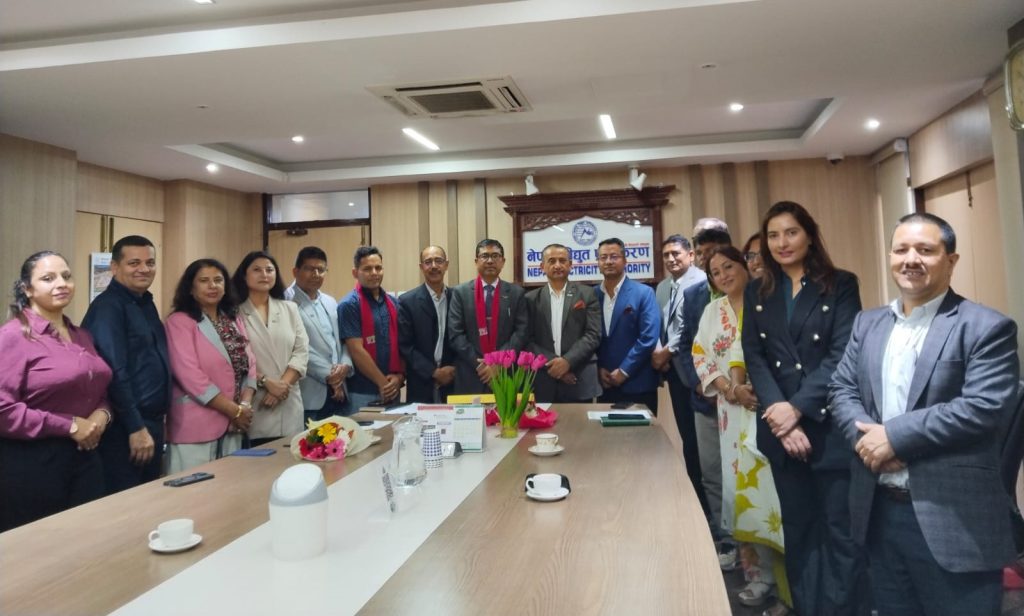
IPPAN contested an NEA rule requiring projects to finish 30 percent of physical construction before requesting any change to their grid connection point or voltage rating, warning that utility-driven delays could cause developers unnecessary expenses. The association also rejected limiting connection revisions to a single instance and opposed an across-the-board 1 percent deduction for transformer losses. NEA chief Shrestha said the utility would review the draft and pledged closer coordination, noting that an initial proposal to resume PPAs for projects up to 10 megawatts is already before the NEA board of directors, Saral Patrika reported.