
Trump and Xi Extend Trade Truce and Open AI Talks at Washington Summit
US President Donald Trump and Chinese leader Xi Jinping secured a temporary trade truce extension and established new AI talks at a White House summit, though major strategic rifts remain unresolved.
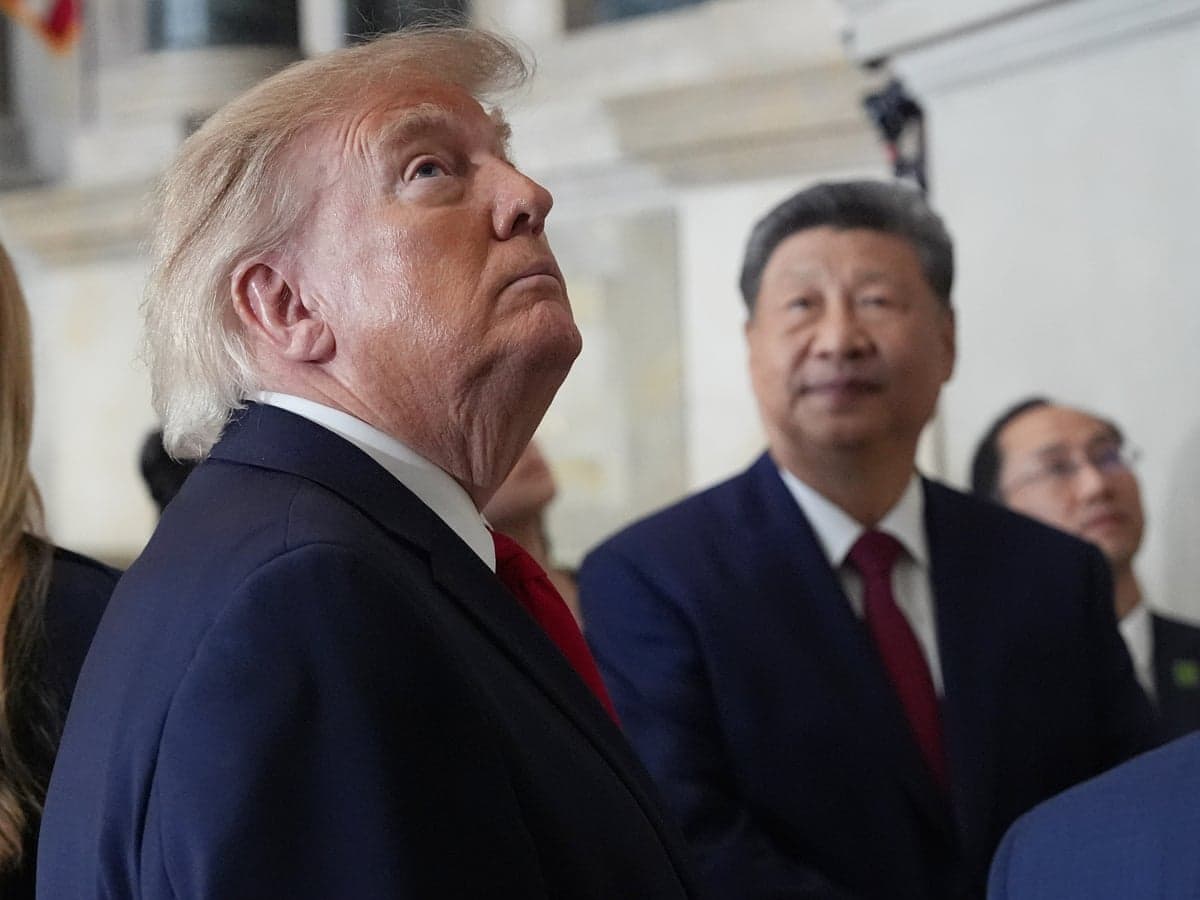
United States President Donald Trump and Chinese President Xi Jinping have concluded high-stakes bilateral talks in Washington, producing a short-term trade truce extension, an agreement to begin artificial intelligence dialogue, and carefully choreographed gestures of personal rapport, even as deep geopolitical rifts persist.
As reported by BBC News, Beijing confirmed on Monday that the existing trade ceasefire has been extended until January 10. Under the arrangement, Washington agreed to reduce tariffs on $30 billion worth of Chinese goods, spanning household appliances to holiday decorations, in exchange for reciprocal reductions from Beijing and a Chinese pledge to purchase at least 10 million metric tons of US coal annually in 2027 and 2028. Both nations also agreed to launch bilateral AI talks in late November alongside an incident-prevention communication channel.
However, substantive compromises on major technological flashpoints did not materialize. Neither side announced any easing of US restrictions on advanced microchips or of China’s curbs on rare earth exports. The Guardian, in an editorial, observed that both superpowers remain intensely fearful of ceding ground in the race for advanced computing, leaving broader industrial rivalries largely untouched.
The summit leaned heavily on symbolic diplomacy to project stability. According to BBC News Nepali, Trump presented Xi with a custom-designed sculpture of an American bald eagle during a lavish White House state dinner to symbolize the nation’s free spirit. In return, Xi announced that Beijing would loan two giant pandas, Ping Ping and Fu Shuang, to Zoo Atlanta, while also pledging to welcome 100,000 American exchange students to China over the next five years. Former diplomats speaking to BBC News Nepali stressed that such personal engagements and protocol-driven gifts remain vital tools for preventing diplomatic drift between the two rival powers.
Beneath the outward cordiality, sharp strategic disagreements quickly resurfaced. The Guardian reported that Xi pressed Trump to formally oppose Taiwanese independence, while Trump warned Beijing against assisting Iran. Although the US ambassador to China claimed Washington received assurances regarding Iran, The Hindu reported that Chinese Vice-President Han Zheng mounted a direct pushback days later at the United Nations General Assembly. Without naming Washington directly, Han declared that Gulf sovereignty must be respected and demanded an immediate end to US sanctions and the oil blockade against Cuba.
For international observers in South Asia, including Nepal—where foreign policy continuously balances relations between global giants—the Washington summit underlines how the two powers are relying on temporary reprieves and dialogue channels to prevent rivalry from spiralling into direct confrontation.