
Foreign-Affiliated Colleges Defend Legality, Launch Domestic Study Drive
The International Education Providers Association of Nepal rejected unverified claims questioning foreign-affiliated colleges, highlighting their regulatory compliance and economic contributions while launching a campaign to keep students in the country.
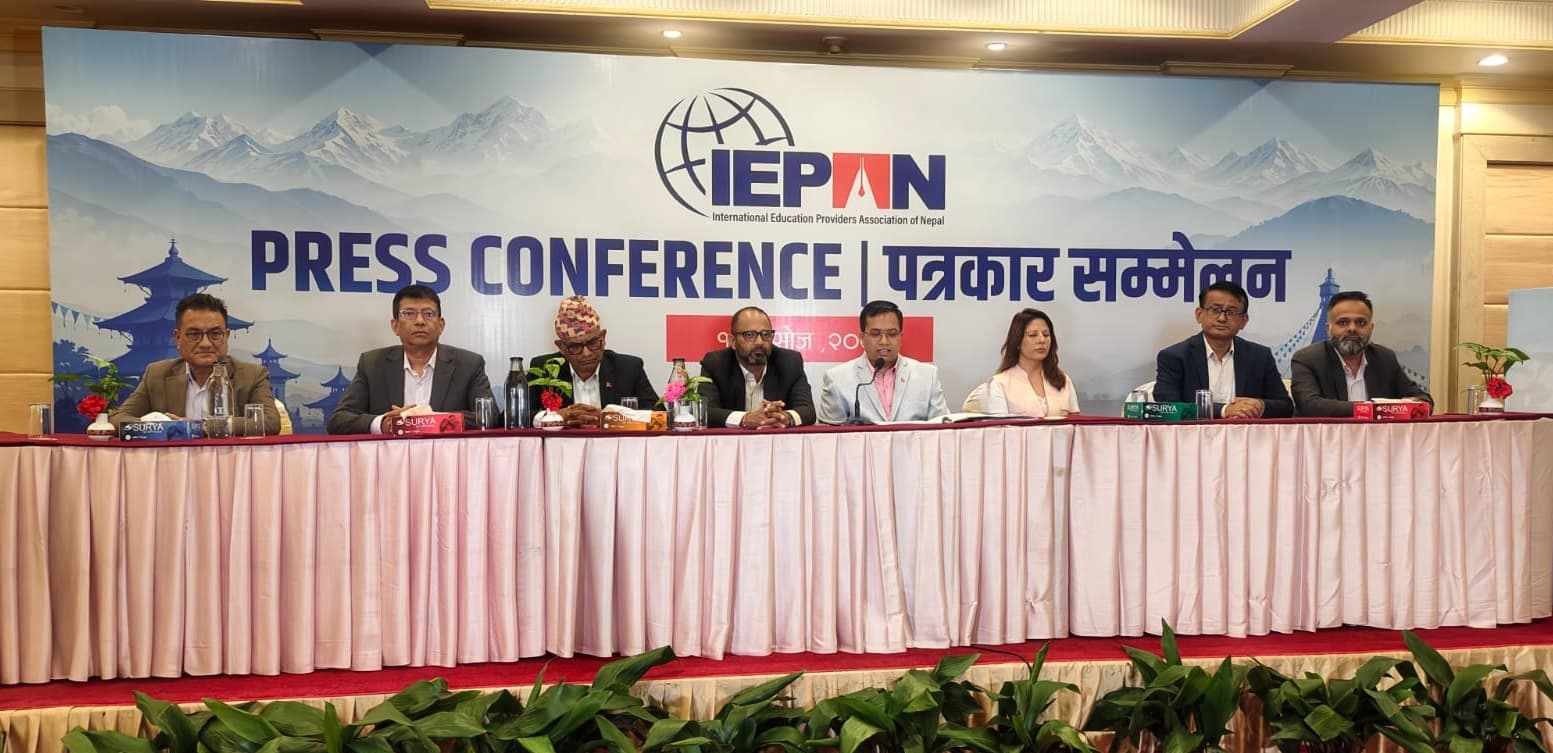
The International Education Providers Association of Nepal (IPAN) defended the legality and academic standing of foreign-affiliated colleges on Tuesday, rejecting what it described as unverified and misleading allegations circulating across social media platforms.
Speaking at a press conference in Kathmandu, IPAN President Laxman KC stated that all accredited partner institutions operate under direct approval from the Ministry of Education, Science and Technology in line with established regulatory directives. According to Annapurna Post, the umbrella body expressed serious concern over baseless claims circulated by a foreign national on social networks, which several media outlets subsequently republished without adequate fact-checking.
Kendrabindu reported that the association pushed back against mischaracterisations labelling affiliated institutions as mere "franchise colleges" or "branch campuses." IPAN clarified that while affiliated institutions deliver foreign curricula and adhere to overseas assessment standards, their ownership and management structures remain legally distinct. The association also refuted allegations of illicit financial transactions, emphasizing that fee transfers to foreign universities occur through formal banking channels approved by the education ministry and Nepal Rastra Bank. Kendrabindu added that IPAN dismissed comparisons between full university degrees in fields such as artificial intelligence and short-term technical certification courses.
According to data published by Gorkhapatra and Nepal Press, 58 approved educational institutions in Nepal currently operate degree programs affiliated with 35 foreign universities across seven countries, serving 37,208 enrolled students. The association pegged total investment across the sector at roughly Rs 25 billion.
Reporting on employment figures varied slightly among the outlets. Gorkhapatra reported that the sector accounts for roughly 5,000 direct and 15,000 indirect jobs, whereas Kendrabindu placed direct employment at around 4,000 alongside 15,000 indirect positions. Nepal Press cited a combined total of around 20,000 direct and indirect jobs. Gorkhapatra and Kendrabindu both reported that the institutions contribute an estimated Rs 500 million in direct taxes and over Rs 1 billion in indirect taxes annually.
Nepal Press reported KC's claim that obtaining an international degree at home costs up to fifteen times less than studying abroad, curbing foreign exchange flight by an estimated Rs 50 billion to Rs 60 billion each year.
To counter student outward migration, IPAN announced its "Stay in Nepal, Study in Nepal" domestic campaign alongside regional promotional drives in South Asia, East Asia, and Africa, Gorkhapatra reported. The association urged the government to establish an official "Study in Nepal Board," simplify student visa procedures through electronic visas or foreign missions, and create faster bureaucratic mechanisms to recruit international students.