
At UN, Shishir Khanal Urges Strong Action Against Racism, AI Bias
Foreign Minister Shishir Khanal urged the UN General Assembly to step up global action against systemic racism and regulate artificial intelligence to curb algorithmic bias, citing Nepal’s constitutional commitments.
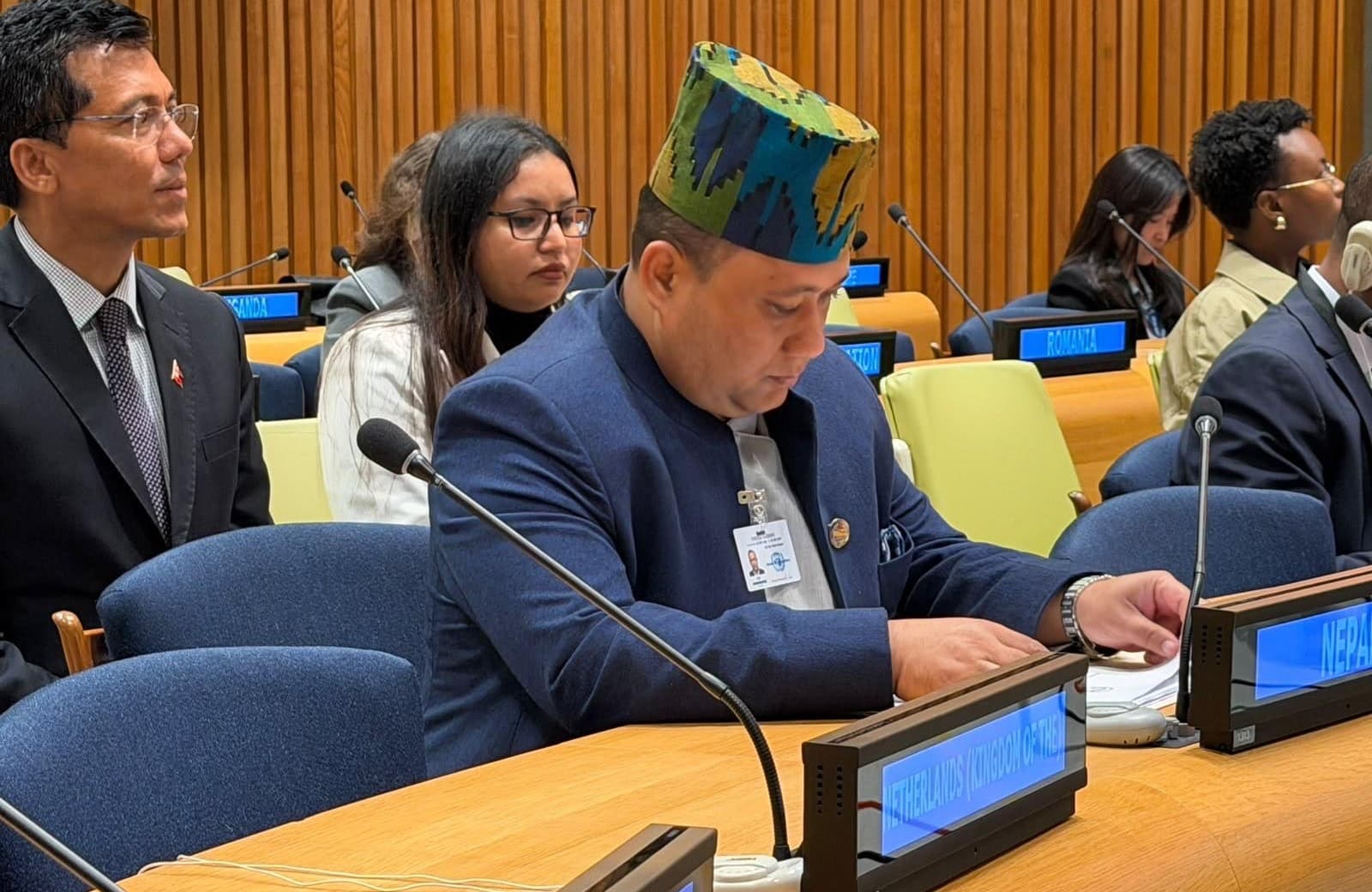
Foreign Minister Shishir Khanal has called on the international community to take decisive action against racism, xenophobia, and institutional injustice, warning that historic patterns of exclusion are now expanding into the digital sphere through artificial intelligence.
Addressing a high-level United Nations General Assembly meeting in New York to commemorate the 25th anniversary of the Durban Declaration and Programme of Action (DDPA), Khanal said prejudice continues to limit human potential, according to reports by Setopati and Nagarik News. The high-level session, convened under the banner of mobilizing worldwide public support for the anti-racism declaration, reviewed global implementation a quarter-century after its adoption.
Onlinekhabar noted that Khanal is attending UNGA events alongside the Nepali delegation led by Prime Minister Balendra Shah. According to Kathmandupati, the foreign minister framed the Durban framework as a reflection of collective international resolve to dismantle the enduring legacies of colonialism, apartheid, and structural inequality.
A central focus of Khanal’s address was the emergence of bias in digital technologies. Kathmandupati and Onlinekhabar reported that he warned of racially biased algorithms and hate speech spreading across artificial intelligence platforms, arguing that emerging technology requires comprehensive regulatory safeguards to prevent automated discrimination.
To advance the goals of the Durban declaration, Khanal outlined four key priorities, as reported by Setopati and Nagarik News. These encompass strictly enforcing anti-discrimination legislation while embedding human rights education from early schooling; guaranteeing that historically marginalized groups participate directly in public policymaking; regulating new technologies to eliminate algorithmic prejudice; and advancing principled multilateral cooperation to dismantle systemic intolerance worldwide.
Connecting international commitments to domestic governance, Khanal reiterated Nepal's constitutional obligations toward equality and social justice. He highlighted that Nepal is party to seven major international human rights instruments, including the International Convention on the Elimination of All Forms of Racial Discrimination, and emphasized that the country's constitution guarantees equal protection before the law and proportional inclusion for marginalized communities.
Addressing domestic challenges, Khanal acknowledged the entrenched historical discrimination faced by Nepal’s Dalit community, stressing that meaningful reform requires political courage. Setopati and Nagarik News reported that he pointed to Rastriya Swatantra Party Chairman Rabi Lamichhane’s apology to the Dalit community from the parliamentary rostrum as an example of political accountability, remarking that the search for justice must begin with institutional humility and moral responsibility.