
Government Tables Bills Proposing Six-Month Paid Maternity Leave
Health and Food Hygiene Minister Nisha Mehta has presented four major healthcare bills in parliament, proposing six months of paid maternity leave, stricter penalties for attacks on health workers, and updated breast milk substitute regulations.
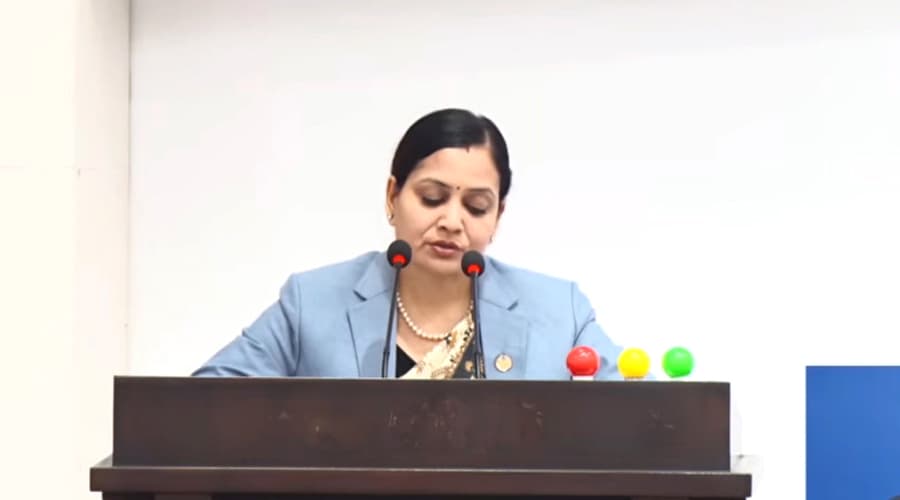
Minister for Health and Food Hygiene Nisha Mehta tabled four priority healthcare reform bills in the House of Representatives on Monday, proposing a major expansion of statutory maternity leave alongside stricter workplace safeguards for medical personnel.
As reported by Swasthya Khabar, the legislative package comprises the Safe Motherhood and Reproductive Health Rights (First Amendment) Bill 2083, the Security of Health Workers and Health Institutions (Second Amendment) Bill 2083, the Ram Raja Prasad Singh Academy of Health Sciences Bill 2083, and the Mother’s Milk Substitutes (Control of Sale and Distribution) (First Amendment) Bill 2083.
Under the proposed safe motherhood legislation, fully paid maternity leave for female workers would increase from the current 90 days to six months, while paid paternity care leave for husbands would expand from 15 days to 42 days, DC Nepal reported. Himal Press reported that Minister Mehta justified the enhanced leave periods as a state incentive aimed at arresting Nepal's declining population growth rate, noting that the measure would apply uniformly across government, non-governmental, and private sector enterprises.
Addressing the preliminary discussion in parliament, Minister Mehta argued that extended maternity leave should not be viewed as an ordinary employee benefit, but rather as an essential investment in national human capital, according to DC Nepal. She stated that private firms and healthcare institutions will be required to guarantee maternity entitlements, with compliance tied directly to organizational operating permits. The reproductive health bill also refines legal standards for safe pregnancy termination, establishes criminal penalties for forced abortions, and mandates that obstetric care only be delivered by certified practitioners.
Swasthya Khabar reported that the health workers' security bill introduces criminal penalties, including imprisonment and fines, for physical assaults against medical staff and vandalism in hospitals. The ministry introduced the punitive measures after existing statutes failed to deter attacks against frontline professionals. Meanwhile, the Ram Raja Prasad Singh Academy of Health Sciences Bill establishes a dedicated institutional framework in Madhesh Province to reduce regional disparities in specialized healthcare access.
Separately, the amendment to the 1992 Breast Milk Substitutes Act introduces scientific criteria for infant nutrition, codifies standards for human breast milk banking, and aligns oversight mechanisms with Nepal's federal structure, Onlinekhabar reported. The outlet noted that the measure clarifies supervisory responsibilities for provincial and local governments while stiffening fines and regulatory sanctions against the improper marketing and distribution of baby formula.